

Most yacht house banks were sized when the biggest load was a fridge and a few navigation instruments. A 12V 400Ah AGM bank on a 12 m boat weighs somewhere north of 100 kg, and only about half of that capacity is usable before the voltage starts to fall away. Then the owner adds a compressor fridge that runs all night, Starlink, an inverter for the coffee maker and a watermaker, and two nights at anchor become one. The bank is not too small. Half of it was never available in the first place.
LiFePO4 changes the arithmetic, but not on its own. Our 12.8V 100Ah marine pack is 330 × 175 × 220 mm, weighs 12.5 kg and stores 1,280 Wh on a flat discharge curve; the 12.8V 400Ah unit holds 5.12 kWh at 300A continuous, and the 51.2V 100Ah model covers boats already wired for 48V. The standard marine line is nine 12.8V capacities — 100, 150, 200, 230, 280, 314, 400, 560 and 628Ah — plus 25.6V in 100/200/230/280/314Ah, 38.4V 100Ah and 51.2V 100Ah, all in sealed ABS enclosures. What has not changed is everything around the battery: the alternator, the shore charger, the solar controller, the tray it sits in and the display at the helm.
For a boatbuilder, a refit yard or a marine distributor, the upgrade is a system job sold as a product. Most of the call-backs we see trace back to one of six places, and none of them shows up on a capacity comparison sheet.
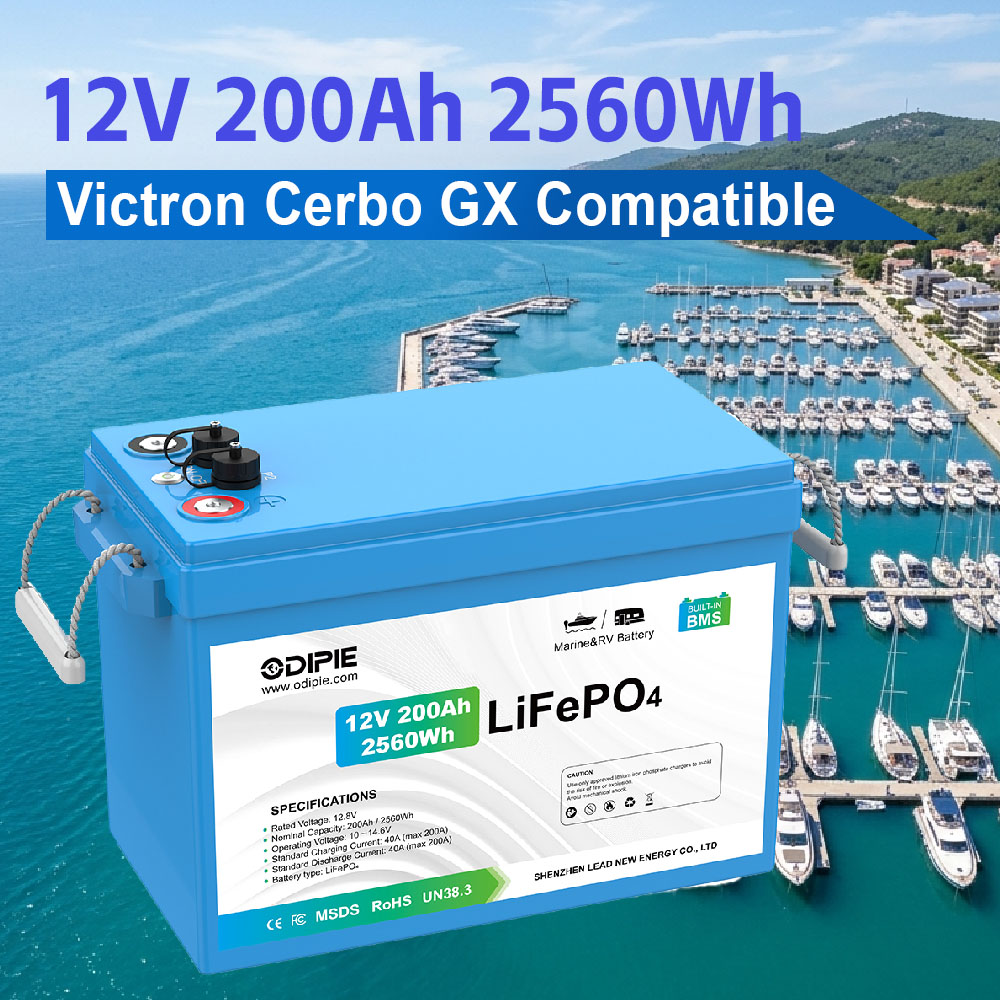
1. Evaluate the Existing Battery Bank and Power Requirements
Start with a load list, not with the number printed on the old case. Work out daily watt-hours, the peak the inverter has to carry, and the longest stretch the boat is expected to sit without shore power or a generator. A Mediterranean charter yacht turns around on a Saturday with a full fridge and empty tanks; a Nordic owner commissions in April and hauls out in October. Those are different duty cycles even when the boats are the same length, and a single Ah figure serves neither well.
On our side that maps to the 100Ah (1,280Wh) pack for a daysailer, the 400Ah 5.12 kWh unit at 300A continuous for a 12–15 m cruising yacht, and 560Ah or 628Ah where a larger boat carries a bigger inverter and a watermaker. Where the yacht is already on a 24V or 48V bus, the 25.6V and 51.2V models slot in without a system redesign. The marine range is rated at 4,000–5,000 cycles at 0.2C, against a few hundred deep cycles for an AGM bank worked to 50% depth of discharge. Starting and house circuits stay separate — we build house banks, not engine-start or propulsion packs.
The figure to put on the drawing is daily watt-hours and the longest off-grid stretch, not the Ah that used to be on the AGM label. A bank sized to the old nameplate tends to be generous in capacity, short on peak current, and still leaves the owner starting the generator before breakfast.
2. Check Charging System Compatibility
This is where refits come back to bite. A shore charger set to an AGM absorption profile will hold a lithium bank at the wrong voltage for hours, and a solar controller with a lead-acid temperature-compensation curve does much the same thing by another route. Our 12.8V packs charge at 14.6V maximum, cut off at 10V, work from 0–55°C on charge and -20–60°C on discharge. The 100Ah unit is supplied for a 14.6V / 20A lithium charger and accepts up to 100A continuous if the charging hardware can deliver it.
The alternator is the part people underestimate. With an internal resistance of ≤20 mΩ on the 100Ah pack, lithium takes whatever current is available instead of tapering off the way a saturated AGM bank would, and a stock alternator ends up sitting at its thermal limit for the whole passage. A DC-DC charger between the engine and the house bank, or an external regulator with a temperature sensor on the alternator, is the usual fix. We have seen enough cooked alternators to insist on it at specification stage, before the boat leaves the yard.
Integration is the other half. Our packs are Victron-compatible over their standard communication interfaces. Below 0°C cell temperature the BMS blocks charging; for boats kept afloat through a Nordic winter we fit BMS-controlled heating films so the bank will accept charge at -20°C ambient. Send the charger, inverter and MFD model numbers before the order goes in. We would rather check a protocol list in the office than have an installer find out in the marina that the display reads nothing.
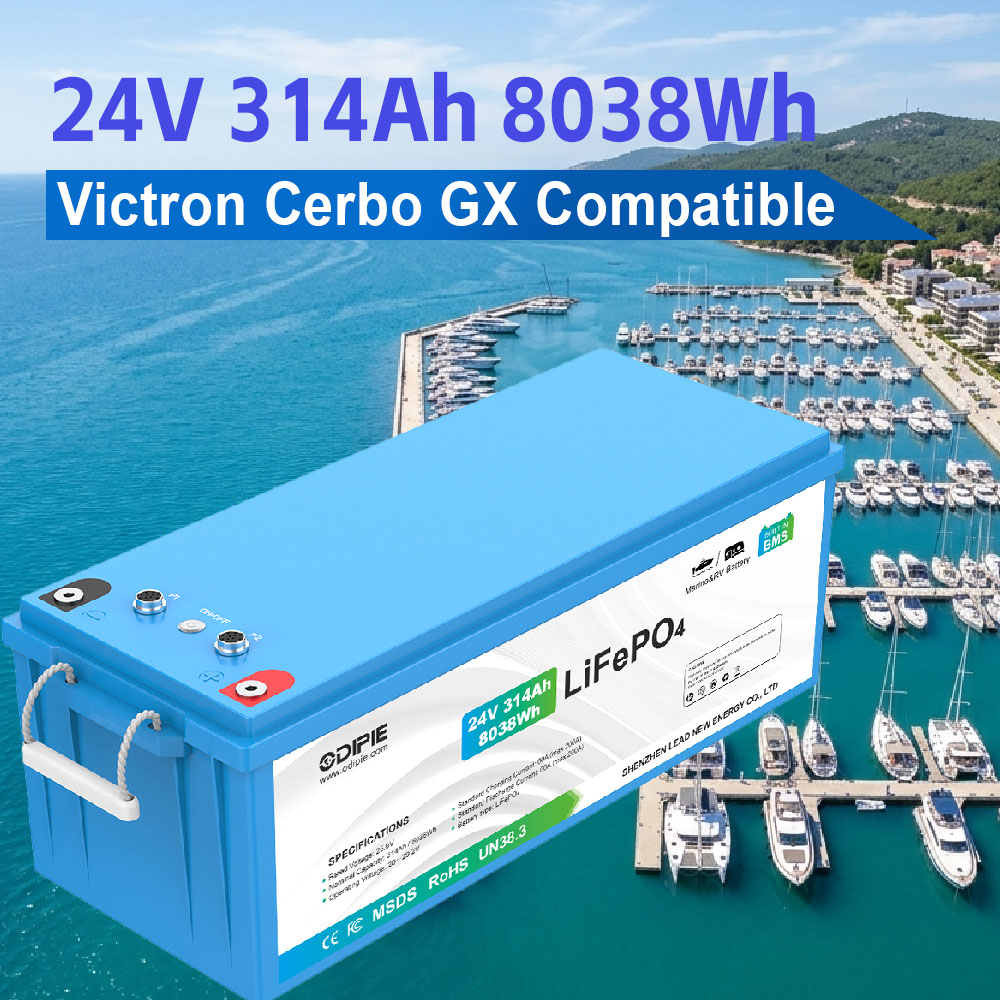
3. Consider Battery Dimensions, Weight and Installation Space
Battery compartments on older yachts were drawn around one lead-acid box, with the hold-down, the cable run and the service hatch all fixed to it. A lithium pack with the right capacity and the wrong terminal side still does not go in, and on a boat there is rarely room to move a bulkhead to make it fit.
The 12.8V 100Ah pack is 330 × 175 × 220 mm at 12.5 kg, against 25–30 kg for the AGM it replaces, and the ABS enclosure simply does not corrode in salt air. That weight comes off low in the boat, which is where it helps. Case size grows with capacity, so the compartment drawing and the with-terminals envelope both need to be on the order — a 628Ah bank is not a 100Ah bank with a different label.
Voltage is the other lever. A 51.2V 100Ah pack stores the same 5.12 kWh as a 12.8V 400Ah bank at a quarter of the current, which changes cable cross-section, breaker ratings and the size of the DC distribution board. On a new build that is a decision for the naval architect, not something to settle after the joiner has cut the locker. For a production run, terminal position and cable exit are set on the first order against the yard’s drawing; enclosure dimensions, color, nameplate and branding are fixed at the same point. We issue the with-terminals envelope alongside the case dimensions, because that is the number the joiner works to.
4. Prioritize Marine Protection and Structural Reliability
Salt air, constant vibration, slamming in a seaway and a bilge that never quite dries will finish a marine battery long before its cycle life does. The failure rarely shows up as a capacity reading; it is usually a corroded terminal, moisture on the board, or a cell that has worked loose in its holder.
The standard marine line uses a sealed ABS enclosure, with corrosion-resistant terminals and fixings, cells braced against movement, and electronics that can be potted for bays that see spray. Vibration and shock tolerance and salt-spray resistance are built into that construction rather than added as an accessory. IP67 is the top protection rating in the range, not a blanket default for every version, so it is worth confirming which rating is on the quote. Discharge is rated -20–60°C. What we ask buyers to check is the test report tied to the model number — an IP claim on a family datasheet is not the same thing as a report for the packs being shipped.
When a marine pack is specified, these are the lines we expect to see on the sheet:
Water and dust protection — up to IP67, with the test report matched to the model and version being shipped.
Enclosure and hardware — sealed ABS case that will not corrode in salt air, with corrosion-resistant terminals and fixings throughout.
Vibration and structure — braced cell positioning, vibration-tolerant mounting and optional potting, so the pack holds together through slamming in a seaway.
Salt spray — sealed housing and treated hardware; ask for the salt-spray and vibration test reports if a surveyor or class society wants them on file.
Verification — IP, vibration and salt-spray report numbers requested before the first container, not after a warranty claim.
5. Evaluate BMS Functions and Communication Options
A BMS on a boat has two jobs: keep the cells inside their window, and tell the rest of the boat what is happening. The first is a specification; the second is an integration project, and the two are often quoted as if they were the same line item.
On the 100Ah pack the protection map is 3.65V cell overvoltage, 2.5V undervoltage, 105A charge overcurrent, two-stage discharge overcurrent at 110A and 210A, a short-circuit trip around 1,000A, and separate temperature limits on charge, discharge and the MOSFETs. Passive balancing, pre-discharge, parallel communication and a 200A / 5s peak are built in, and packs can be wired in series or parallel as the bank grows. Bluetooth is standard across the range, with state of charge, voltage, current, cell temperature and cycle index read straight from a phone.
The interface set is CAN, RS485, RS232 and RJ45 as standard, and the packs speak Victron’s communication protocol, so a Cerbo GX reads state of charge, cell voltages and temperatures without a gateway in between. What still needs agreeing is the data map for anything else on the bus — a chartplotter, a third-party energy management system or a yard’s own monitoring panel may each want their own definitions. We adapt protocols from a written specification and confirm those definitions before tooling. If a supplier answers “it has CAN” and stops there, the integration work has simply moved onto your installer’s invoice.
6. Work with a Manufacturer That Understands Marine Applications
Price per Ah and cycle life are the easy columns on a comparison sheet. The harder question is whether a supplier holds one specification and can still change the case, the protocol and the terminal layout when a boat design moves on.
At ODIPIE we build the whole standard marine line on one BMS platform — the 12.8V, 25.6V, 38.4V and 51.2V models all share it — so a yard can move between capacities without re-qualifying the electrical system, the charger profile or the documentation set. OEM/ODM work covers 12–72V and 5–628Ah: enclosure dimensions, terminal layout, BMS firmware, protocol adaptation for a specified GX device or monitoring system, low-temperature heating, app and branding. Enclosure size, color, logo, nameplate, carton and manual are fixed on the first order.
The engineering side is staffed rather than outsourced: eight senior R&D engineers, two invention patents and 22 utility model patents. Four lines turn out roughly 10,000 packs a month; stock models ship in about three days and custom builds in 20. Custom programs start at 100 units, with a proposal back within 24 hours of a compartment drawing and load list, then samples for testing before production. We ask for the charger models, the display it has to talk to and the certification list at that point. A supplier who quotes from the capacity alone is quoting a battery, not an installation.
Each batch ships with UN38.3, MSDS, CE, FCC, RoHS and UKCA documents, with IEC 62619 reports and the EU Battery Regulation declaration of conformity for EU-bound programs; UL support is scoped per project and the plant runs to ISO 9001:2015. For a distributor the paperwork matters as much as the pack — a container held at port over a missing UN38.3 report costs rather more than the price difference between two suppliers.
Conclusion
Lithium buys a yacht roughly twice the usable energy at about half the weight, and several thousand cycles instead of a few hundred. None of that survives a charger set to the wrong profile, a compartment drawing nobody checked, an IP claim with no report behind it, or a data map nobody agreed before the pallet was booked.
The upgrade is worth doing. It just is not a battery swap. Settle those six points with the yard, the integrator and the supplier first, and the boat comes back in the autumn with the same bank it left with in the spring.
Looking for a marine LiFePO4 manufacturer for a yacht line or a refit program?
ODIPIE builds house banks for boatbuilders, refit yards and marine distributors across the EU, UK, North America and Australia — the standard sealed ABS range from 12.8V 100Ah through 51.2V 100Ah, and OEM/ODM builds from 10 units.
Send the compartment drawing with tolerances, the load list, the charger and inverter models, the display or MFD the pack has to talk to, and the certification list for your market. We will come back with a datasheet, sample terms and the questions the drawing raises.
Post time: Nov-28-2026


