
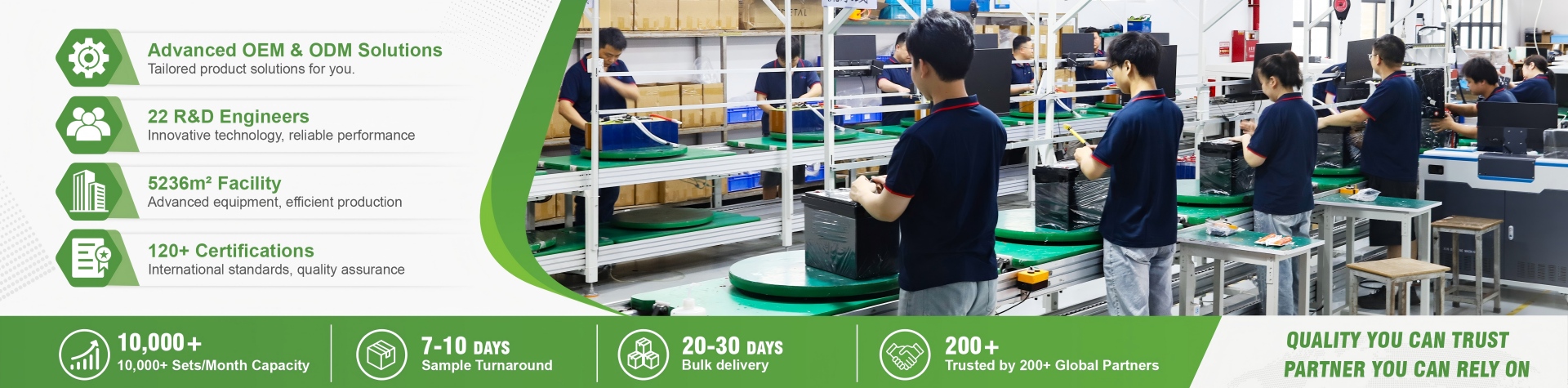
Quality Control Management

From Cell to Finished Product: A Comprehensive Guide to Battery Pack Manufacturing Processes and Rigorous Quality Control
------Precision Control Down to the Millimeter: Crafting High-Safety, High-Consistency Lithium-Ion Battery Products
ODIPIE Lithium-Ion Battery Production Quality Control Process:
1. Order and Material Preparation Control: Once an order is confirmed, a production plan is issued, and material procurement is initiated simultaneously; All materials must undergo incoming quality control (IQC) before entering the facility; non-conforming materials are rejected outright, and only those that pass inspection are stored in the warehouse.
2. First-Article and Process Validation: After material preparation is complete, the first production unit is manufactured and undergoes comprehensive performance testing; simultaneously, process SOPs and industry certification standards are validated. Only when both the first-article and the process meet standards is mass production permitted.
3. Cell Batching and Sorting: Cells are grouped according to stringent standards, requiring a voltage difference of ≤±2 mV and an internal resistance difference of ≤±0.1 mΩ. This ensures cell consistency from the source, laying the foundation for stable battery operation.
4. Assembly and Welding Control: After laser welding of the cells, the tensile strength of the connection tabs (5% random inspection, ≥50 kg) and the lead wires (≥5 kg) is strictly tested. Solder joints on the lead wires must be reinforced with adhesive to eliminate the risk of cold solder joints or solder joint failure.
5. Full-Process Quality Inspection During Assembly: After welding, the cable harness is organized, the BMS (Battery Management System) is secured, and the positive and negative terminals are neatly routed. Simultaneously, the battery pack undergoes multi-layer insulation treatment, with installation accuracy and safety verified at every step.
6. Electrical Performance and Cycle Testing: After the battery pack is fully assembled, first verify that the internal resistance meets specifications; then conduct charge-discharge aging cycle tests (process: discharge to empty → fully charge → discharge to empty → charge to 70% SOC) to screen out early defects and ensure the battery’s cycle life.
7. Functional and Final Inspection: After passing the aging test, a full functional test of the battery is conducted. Following casing, a final visual inspection is performed to ensure no scratches or adhesive overflow, no oxidation on the terminals, and a centered nameplate with no creases; non-conforming products are reworked.
8. Packaging and Shipping Verification: Qualified products are sealed, packed, and arranged on pallets. After warehousing, they undergo a final commercial inspection; once confirmed, shipping is arranged, with the entire process traceable through documentation.


