
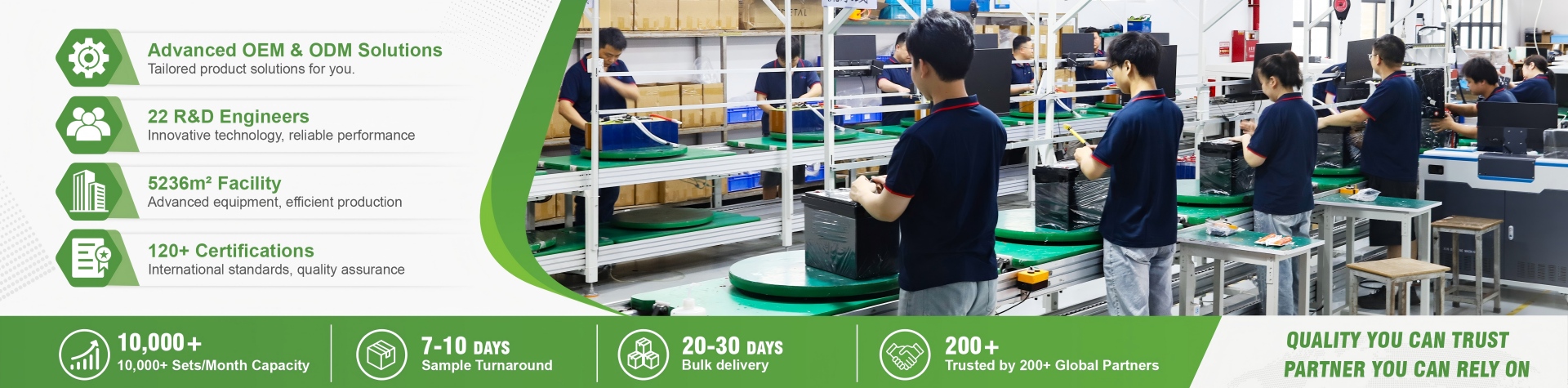
Manufacturing Processes
An exceptional battery pack is not only the result of high-quality cell materials but also depends on a rigorous, precise, and traceable production process system. Today, we are releasing our internal “Battery Pack Production Process Flowchart” to take you behind the scenes and reveal how a high-quality battery pack passes through layer upon layer of quality checks before it is finally delivered to our customers.
ODIPIE Lithium-Ion Battery Production Process
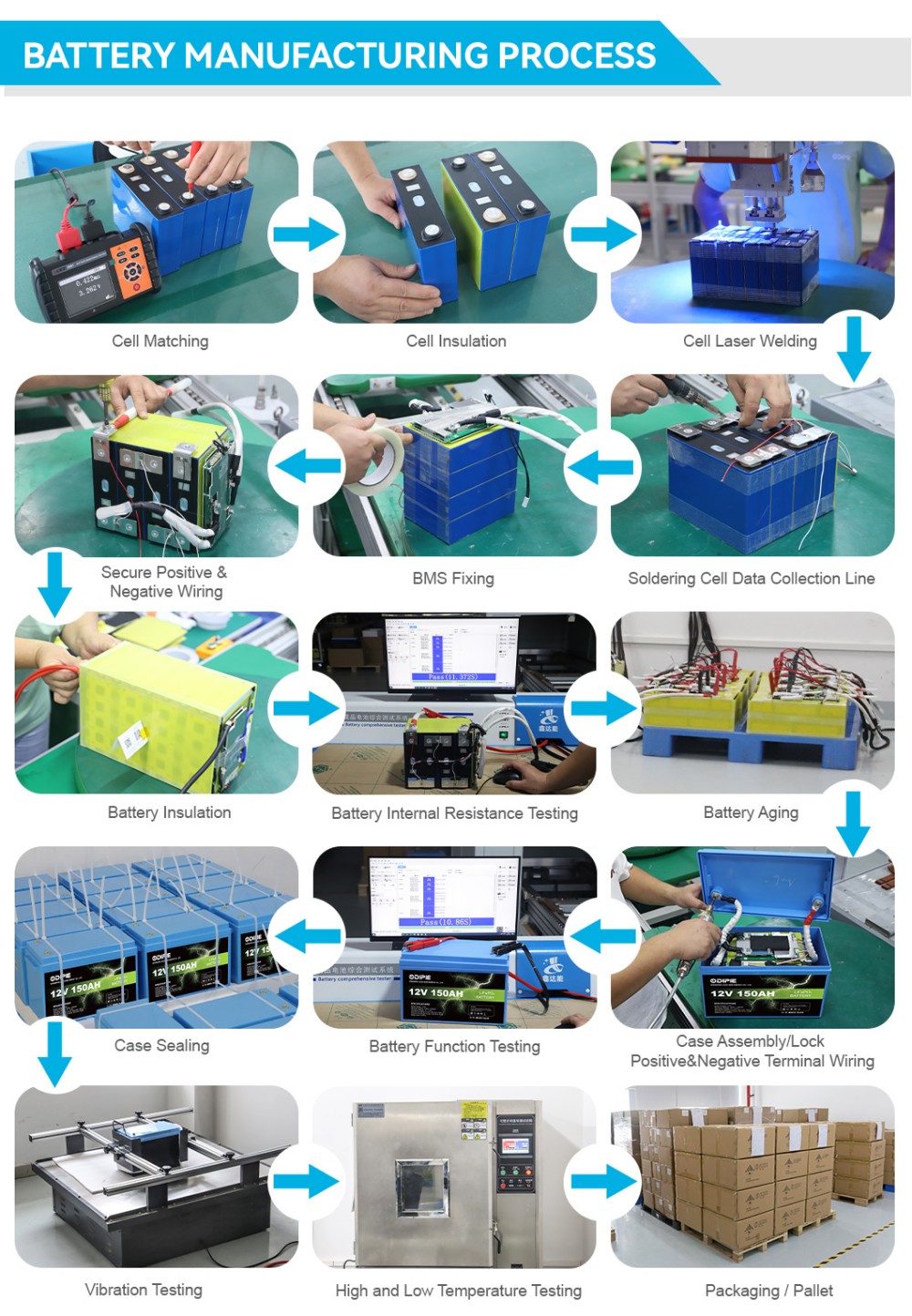
1. Battery Cell Matching: First, the cells undergo consistency screening and matching to ensure parameters such as voltage and internal resistance are consistent, laying the foundation for subsequent assembly.
2. Cell Insulation: The matched cells undergo insulation treatment, wrapped in epoxy board insulation material to prevent the risk of short circuits between cells.
3. Laser Welding: Using laser welding technology, the cells are securely connected into a pack, ensuring connection stability and electrical conductivity.
4. Data Cable Attachment: Data cables are attached to the welded cell packs to provide signal collection points for subsequent BMS management.
5. Battery Management System (BMS) Mounting: The BMS is securely mounted onto the cell pack to ensure a stable installation and provide the hardware foundation for battery safety management.
6. Positive and Negative Terminal Wiring: The positive and negative terminal wiring of the battery pack is secured and reinforced to ensure stable and reliable current transmission.
7. Battery Insulation: The entire battery pack is wrapped again with epoxy board insulation to further enhance the overall insulation protection rating.
8. Battery Internal Resistance Testing: Conduct internal resistance testing on the assembled battery pack to verify that the internal resistance of the cell assembly meets standards.
9. Battery Aging Testing: Perform long-term charge-discharge aging tests on the battery pack to simulate actual operating conditions and identify early defects.
10. Enclosure Assembly / Securing Positive and Negative Terminals: The battery pack is assembled into the enclosure, and the positive and negative terminals are securely fastened, completing the initial product assembly.
11. Battery Functional Testing: Comprehensive functional testing is performed on the finished battery, including protection functions and communication capabilities, to ensure all specifications are met.
12. Enclosure Sealing: The battery enclosure is sealed to enhance waterproofing and dustproofing performance, meeting the protection requirements of various application scenarios.
13. Vibration Testing: Subject the finished batteries to vibration testing to simulate the vibration environments encountered during transportation and use, verifying the structural stability of the product.
14. High and Low Temperature Testing: Test the batteries in high and low temperature environments to verify their performance and safety under extreme temperature conditions.
15. Packaging / Palletizing: After final inspection, professionally package the batteries and stack them onto pallets to ensure safe delivery to the customer.


